
If you’ve found fleas in your home, you already know the feeling. That constant itch. Your pets scratching nonstop. The tiny dark specks jumping off your carpet when you walk through the room. It’s one of the most frustrating pest problems a homeowner can deal with — and it escalates fast. Before you start building your own solution to get rid of fleas fast, you first have to know something about them.
Here’s the thing about fleas: by the time you notice them, you’re already behind. A single female flea can lay up to 50 eggs per day. Those eggs fall off your pet and land in your carpet, your furniture, your bedding, and anywhere else your pet spends time. You don’t just have a flea — you have a flea population. The good news is that fleas are beatable. Here’s exactly what to do.
Table of Contents:
- Why Fleas Are So Hard to Get Rid of on Your Own
- What You Can Do Right Now To Get Rid of Fleas Fast*
- The Honest Limit of DIY Flea Treatment
- What R&R Pest Control Does Differently
- How to Keep Fleas Out for Good
- Want to Get Rid of Them for Good?
Why Fleas Are So Hard to Get Rid of on Your Own
Before getting into the steps, it helps to understand why fleas seem to come back no matter what you do.
Fleas have four life stages: egg, larva, pupa, and adult. Most over-the-counter sprays and flea bombs only kill adult fleas. The eggs, larvae, and pupae — which can make up 95% of the flea population in your home at any given time — survive the treatment and hatch into new adults within days or weeks.
That’s why homeowners spray once, think it worked, and then find fleas again two weeks later. They didn’t fail. They just only killed part of the problem.
Effective flea treatment has to break the entire life cycle — not just knock down the adults you can see.
What You Can Do Right Now To Get Rid of Fleas Fast*
*These steps won’t replace a professional treatment if the infestation is established, but they reduce the population and stop the spread while you get a plan in place.
Vacuum everything — aggressively. Vacuuming is the single most effective immediate action you can take. It physically removes eggs, larvae, and adults from carpet fibers, furniture, baseboards, and floor cracks. Focus on anywhere your pet sleeps or spends time, and don’t skip the edges of rooms where carpet meets baseboard — fleas love those spots.
Vacuum daily until the infestation is resolved. When you’re done, seal the vacuum bag in a plastic bag and throw it away outside immediately. Fleas will crawl back out otherwise.
Wash all pet bedding, blankets, and soft furnishings. Everything your pet touches goes into the washing machine on the hottest setting. Do this immediately and keep doing it every few days until the problem is gone.
Treat your pets. You can vacuum and treat your home all you want, but if your pet is still carrying fleas, they’ll keep reinfesting every surface they touch. Talk to your vet about an appropriate flea treatment for your pet — oral treatments and topicals that kill fleas on contact are significantly more effective than flea collars for an active infestation.
Use a flea spray or powder on carpeted areas. Look for products that contain an IGR — an Insect Growth Regulator. This is the ingredient that disrupts the flea life cycle rather than just killing adults. It won’t work overnight, but IGR-based products are significantly more effective than standard flea sprays. Apply to all carpeted areas, furniture, and pet resting spots and leave it to work.
Don’t let treated pets back in until sprays have dried. This sounds obvious but gets skipped. Wet product on paws and fur doesn’t help anyone.
The Honest Limit of DIY Flea Treatment
If your infestation is mild and you caught it early, the steps above may be enough. But if fleas have been in your home for more than a couple of weeks, if you’re finding them in multiple rooms, or if you’ve already tried over-the-counter products and the problem keeps coming back — you’re dealing with an established infestation that DIY products aren’t designed to handle.
That’s not a failure on your part. It’s just the reality of how fleas reproduce. At a certain population level, you need professional-grade products and treatment methods that aren’t available off the shelf.
What R&R Pest Control Does Differently
When you call R&R, here’s what actually happens:
- Full property inspection first.
Before any treatment starts, we inspect your home — inside and out — to identify where fleas are concentrated, where they’re breeding, and what’s driving the infestation. The yard is just as important as the interior. Fleas often live in shaded outdoor areas and hitch a ride inside every time your pet comes through the door.
- Indoor treatment targeting all life stages.
We use professional-grade products that address every stage of the flea life cycle — not just the adults. That includes IGR compounds that prevent eggs and larvae from developing into new adults, which is what breaks the cycle rather than just temporarily reducing the population.
- Outdoor treatment of the yard and perimeter.
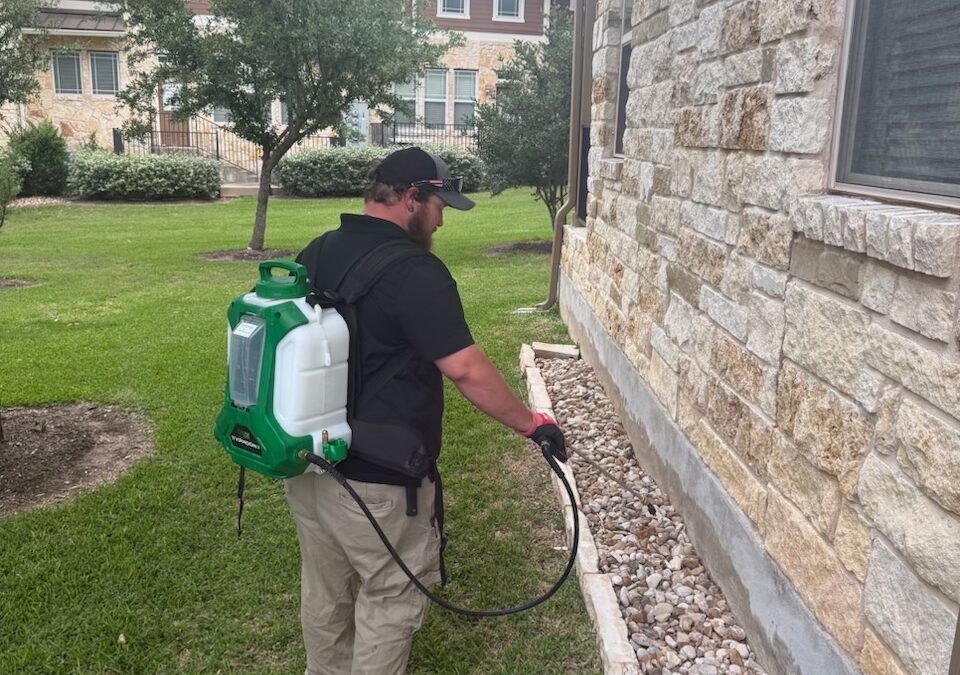
Most flea treatments homeowners do miss the yard entirely. We treat shaded areas, ground cover, and the perimeter of your home — the zones where fleas wait to come back inside.
- Safe for your family and pets.
Our treatments are targeted and applied by trained technicians who know how to use them safely. We’ll tell you exactly how long to stay out of treated areas and what to do with pets during and after treatment.
- Follow-up.
A single treatment handles the current population. A follow-up visit two to four weeks later catches any newly hatched fleas before they can start laying eggs again. That follow-up is what prevents the frustrating cycle of treatment working for a few weeks and then fleas reappearing.
How to Keep Fleas Out for Good
Getting rid of fleas is one thing. Making sure they don’t come back is another — and it’s where a lot of homeowners drop the ball after a successful treatment.
Keep your lawn trimmed.
Fleas thrive in tall grass, leaf litter, and shaded areas near the ground. A maintained yard is a less hospitable environment.
Keep wildlife out of your yard.
Raccoons, opossums, stray cats, and squirrels are flea carriers. Anything that reduces wildlife access to your yard — sealed trash cans, motion lights, removing food sources — reduces your flea exposure.
Maintain year-round flea prevention on your pets.
This is the most important one. In Cedar Park’s climate, flea season doesn’t really end — it just slows down slightly in winter. Year-round flea prevention on your pets is the most reliable way to prevent reinfestation.
Vacuum regularly.
Even after an infestation is resolved, regular vacuuming removes any stray eggs before they can develop. It’s cheap prevention.
Schedule regular pest control visits.
Proactive treatment on a regular schedule keeps flea populations from ever establishing. R&R serves Cedar Park and the greater Austin area — and a recurring plan is significantly less expensive and disruptive than treating a full infestation.
When You’re Ready To Get Rid of ‘Em For Good…
When fleas are already in your home, the fastest path to a flea-free house is a professional treatment that addresses the whole problem — inside, outside, and across the entire life cycle.
R&R Pest Control has been serving Cedar Park and the Austin area for over 30 years. We’ll inspect your property, treat it thoroughly, and follow up to make sure the problem is actually gone — not just temporarily reduced.